
Kickstarter hardware timeline: funded to delivered
Short answer: The real kickstarter hardware timeline from funded to first unboxing is 12 to 18 months, not 3.
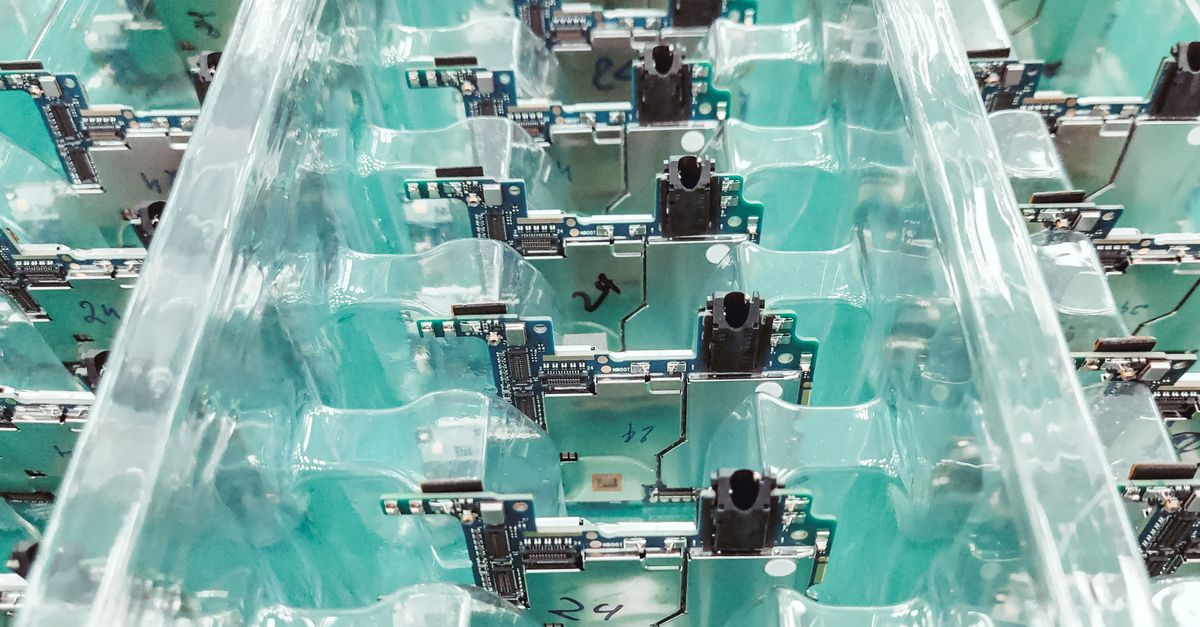
Take a walk through any funded hardware Kickstarter and look at the estimated delivery date on the campaign page. Then check the comments six months later. There will be a very polite update explaining that things are going a bit slower than planned, and a very impolite comment underneath.
This isn’t a scandal, it’s just how hardware works. Founders pitch a 3-month timeline because their spreadsheet says 3 months. Backers assume 3 months because the campaign page says 3 months. Reality shows up around month 9 and neither party is ready for it. As the official Kickstarter Expert Partner for the UK, I’ve watched enough hardware campaigns from funded to shipped to tell you the honest kickstarter hardware timeline is 12 to 18 months, and the founders who plan for 12 to 18 months are the ones whose backers still like them at the end of it.
Let’s walk through what actually happens.
The post-funding lull nobody warns you about
Your campaign ends. You’ve raised the money. You feel like a hero for about a week.
Then nothing visible happens for two to three months, and this is the bit that catches everyone. Kickstarter takes 14 days to process pledges. Stripe takes another few business days to pay out. Then you’re chasing your pledge manager set-up, your DFM engineer, your factory quotes, your certification lab bookings. All useful work, none of it exciting to a backer waiting for a shiny box.
Meanwhile your backers assume you are boxing units. They are not thinking about DFM cycles. They are thinking, “It said April on the page.” This gap between what founders are doing and what backers imagine they’re doing is where most of the goodwill leaks out. If you want a longer read on why funded campaigns still go sideways, my piece on why Kickstarter campaigns fail covers the post-funding failure modes in more detail.
The real month-by-month timeline
Here’s the honest breakdown for a genuinely new hardware product being made in China, assuming nothing catastrophic goes wrong.
| Months | Stage | What’s actually happening |
|---|---|---|
| 0 to 1 | Pledge processing + payout | Kickstarter holds funds 14 days, Stripe pays out, you set up the pledge manager |
| 1 to 3 | DFM + factory selection | Design for Manufacturing tweaks, factory quotes, sample builds, contracts signed |
| 3 to 5 | Tooling | Steel injection moulds cut, PCB layout finalised, first shot samples |
| 4 to 6 | EVT | Engineering Validation Test builds, functional debugging, mechanical revisions |
| 6 to 8 | DVT + certification | Design Validation Test, pre-compliance and full FCC / CE / UKCA testing |
| 8 to 10 | PVT + pledge manager close | Production Validation Test, address collection, add-on sales, final SKU counts |
| 9 to 11 | Mass production | Factory runs full batch, in-line QC, packaging assembled |
| 10 to 12 | Freight + customs | Sea freight from Shenzhen or Ningbo to your 3PL, customs clearance |
| 12 to 14 | 3PL receipt + wave 1 shipping | Kitting, labelling, first backers get tracking numbers |
| 14 to 18 | Long-tail shipping + replacements | Slow regions, address updates, damaged units, warranty claims |
If your product has no radios, no custom moulds and no certification, you can compress this. If it has all three plus a difficult certification path, you can stretch it. Anyone selling you a shorter timeline than this either hasn’t shipped hardware or is planning to.
DFM and tooling: where the fantasy meets the CNC machine
Design for Manufacturing is the step where your beautiful CAD model meets a factory engineer who explains why it can’t actually be made that way. Wall thicknesses need adjusting. Draft angles need to be added to every moulded part. Snap-fits need to be redesigned so an operator can assemble them in under 30 seconds without breaking anything.
This work usually takes 4 to 8 weeks and it happens in parallel with factory selection. You will get quotes from three factories. Two will be too expensive. One will be suspiciously cheap and you will realise later why. Pick the middle one, but visit it if you can, or get someone you trust to visit it for you.
Then comes tooling. Injection moulds for a small consumer electronic run £8,000 to £40,000 depending on complexity, and lead times are 6 to 12 weeks from sign-off to first shot. Steel tools last hundreds of thousands of shots, aluminium tools are cheaper and faster but wear out. For a Kickstarter run of a few thousand units aluminium is often fine, but if you’re planning a second campaign or a retail follow-on, spend the extra and buy steel once.
The bit founders underestimate: tooling changes cost money and time. Every “small tweak” after first shots means welding steel, machining it back down, and eating another 2 to 3 weeks. Get the CAD right before you cut steel. Simple to say. Painful to enforce.
EVT, DVT, PVT: the three builds you need to know
Most hardware founders arrive at Kickstarter having never heard these acronyms. They matter, so here they are in plain English.
EVT (Engineering Validation Test) is the first proper build using near-final parts. Usually 20 to 100 units. The goal is to prove the design works at all. Things break. PCBs get respun. Firmware gets rewritten. This is the stage where you find out your enclosure doesn’t quite close because the battery is 0.4mm too tall. Expect 4 to 8 weeks, sometimes two EVT cycles if the first one turns up big issues.
DVT (Design Validation Test) is the second build using production-intent parts and processes. Usually 100 to 500 units. The goal is to prove the design works consistently, at real-world temperatures, dropped from waist height, after being sat on. This is also when you submit for FCC, CE and UKCA certification, because the units need to be representative of what you’ll actually ship. Another 4 to 8 weeks, plus 4 to 10 weeks of certification testing in parallel.
PVT (Production Validation Test) is a short production run using the actual line, the actual operators and the actual QC checks. Usually 500 to 2,000 units. The goal is to prove the factory can make it at volume without the yield collapsing. If PVT goes well, you release for mass production. If it doesn’t, you loop back and eat another 4 weeks.
Nobody skips these. Or rather, people do skip them, and those are the campaigns that ship 10,000 units of a product that dies within a fortnight. If you take one thing from this post, take EVT, DVT, PVT.
If any of this is sounding like a lot, that’s because it is. My £750 coaching bundle is where hardware founders come to have someone walk beside them through DFM decisions, factory choice and certification planning without hiring a full agency.
Certification: the ambush at month 7
FCC (US), CE (EU) and UKCA (Great Britain) are non-negotiable for anything with electronics or radios. If your product has Bluetooth or Wi-Fi you’ll also need Bluetooth SIG registration and radio-specific certifications on top. RoHS covers restricted substances. REACH covers chemical safety in the EU. If you’re going into the US and you have a battery, you also need UN38.3 for shipping.
Budget £6,000 to £20,000 for a full round of certifications on a consumer electronic. Testing itself takes 4 to 10 weeks per market, and it happens after DVT because the units need to be production-representative.
The ambush is that certification is where a lot of hardware campaigns discover they’re going to be late. Fail an EMC test and you might need to add a shielding can or a filter, which means a PCB respin, which means another EVT-lite cycle, which means 6 weeks. It’s the single most common reason a “we’ll ship in June” turns into “we’ll ship in October.”
When I worked with FLYTE, the levitating light bulb, we were delayed by a full year on FCC alone. Shipping globally means every market wants its own paperwork, and the certification stack ended up taking dramatically longer than any of us had planned for. That was a well-funded campaign with a serious engineering team, and it still ate a year. If it happens to a team like that, it can happen to yours.
Start certification conversations before you fund. Book lab slots as soon as you have DVT samples. And if you’re a UK founder juggling all three markets, my post on crowdfunding for hardware in the UK post-Brexit walks through the CE + UKCA split that’s caught out a lot of British teams since 2023.
Manufacturing, freight, and the last mile
Once PVT passes and certifications are in, mass production is usually 60 to 120 days depending on batch size, factory backlog and Chinese New Year timing. Chinese New Year is the single biggest hidden slip in any Asia-manufactured campaign. If your PVT signs off in mid-January, your factory is gone for four weeks and everyone is pretending that’s fine. Plan around it.
Freight is the next chunk. Sea freight from Shenzhen or Ningbo to a UK or US 3PL runs 5 to 7 weeks door-to-door once you factor in customs. Air freight is 5 to 10 days and roughly 10 times the cost per kg. Most founders sea-freight the bulk of the order and air-freight a small first wave to backers who paid for early shipping tiers. It’s a decent compromise.
Then your 3PL receives the pallets, checks them in (this alone takes 1 to 2 weeks at busy times), kits with any add-ons from the pledge manager, and starts printing labels. First wave usually ships 2 to 4 weeks after container arrival. I’ve written before about the mechanics of what happens after the money lands in Kickstarter fulfilment: what happens after the money lands, which is the natural companion to this post.
Where the extra 6 months usually comes from
I said 12 to 18 months. The 12 is the good version. The 18 is where at least one of these has hit:
- DFM iteration: designer’s CAD doesn’t quite work in real materials, respin costs 4 to 8 weeks
- EVT failures: two EVT cycles instead of one, or PCB revision needed, 6 weeks each
- Certification fail: EMC or radio issue means design change, retest, 6 to 10 weeks
- Factory swap: you fire your factory in month 4, restart tooling elsewhere, add 3 months minimum
- Chinese New Year: falls in the middle of your build, adds 4 weeks
- Freight: port strikes, container shortages, Red Sea reroutes, any of it can add 2 to 6 weeks
- Pledge manager delays: backers change addresses, missing surveys, hunting down replacements
Most campaigns will hit at least one of these. Some hit three. That’s the honest version, and it’s why underestimating the timeline is a classic entry on my list of 30 expensive Kickstarter mistakes that even experienced founders keep making.
Key takeaways
- Realistic funded-to-shipped for hardware is 12 to 18 months, not 3 to 6.
- Post-funding, expect a 2 to 3 month lull before anything visible happens.
- Injection mould tooling costs £8,000 to £40,000 and takes 6 to 12 weeks to cut.
- EVT proves it works, DVT proves it works consistently and passes cert, PVT proves the factory can build it.
- FCC, CE and UKCA certification costs £6,000 to £20,000 and takes 4 to 10 weeks per market.
- Sea freight is 5 to 7 weeks, air freight is 5 to 10 days at roughly 10x the cost.
- 61 percent of funded Kickstarter projects ship late, per the Hauge and Chimahusky analysis.
Want a hand with yours?
Hardware campaigns eat founders alive when the timeline in the pitch deck doesn’t match the timeline in reality. If you’re staring at your Gantt chart wondering if it’s honest, the quickest way to get a second opinion is a £60 strategy call. If you want a longer walk beside you through DFM, factory choice and the whole EVT/DVT/PVT loop, my coaching bundle or done-for-you tier at /#products is the right shape for hardware complexity. Better to spend an hour with me now than eat a 6-month slip in month 8.
Frequently asked questions
How long does a Kickstarter hardware project take to deliver? +
For a genuinely new hardware product manufactured overseas, 12 to 18 months from funding day to backers unboxing is a realistic range. Simpler products with existing tooling can move faster, but anything requiring new injection moulds, custom PCBs and certification usually lands in that window. Six months, which every pitch deck promises, almost never happens.
What are EVT, DVT and PVT in hardware manufacturing? +
They're the three engineering builds a hardware product goes through before mass production. EVT (Engineering Validation Test) proves the design works, DVT (Design Validation Test) proves it works consistently and passes certification, and PVT (Production Validation Test) proves the factory can actually build it at volume. Each stage usually takes 4 to 8 weeks, and it's normal to loop back if something fails.
How much does injection mould tooling cost for a Kickstarter hardware product? +
For a small consumer electronic, expect £8,000 to £40,000 for a set of steel injection moulds, depending on part complexity, cavity count and where the tooling is made. Chinese tooling is usually cheaper and faster than European, with the trade-off being harder QA if you're not on the ground. Lead time is typically 6 to 12 weeks from sign-off to first shot.
Do I need FCC, CE and UKCA certification for a Kickstarter hardware product? +
If your product has any electronics, radios or wireless, yes to whichever markets you ship to. FCC covers the US, CE covers the EU, UKCA covers Great Britain. Bluetooth or Wi-Fi products need extra radio certifications on top. Budget £6,000 to £20,000 across the certifications, plus 4 to 10 weeks of testing time, and start early because failing certification is the number one reason hardware campaigns miss their ship date.
How late do most Kickstarter hardware campaigns ship? +
Late is the norm, not the exception. A Hauge and Chimahusky analysis of 288 funded Kickstarter projects found 61 percent shipped late, and CNNMoney's count of the 50 highest-funded campaigns due by late 2012 found only eight hit their delivery date. Steve Jackson Games has said a roughly one-month slip is essentially on schedule for the average Kickstarter.